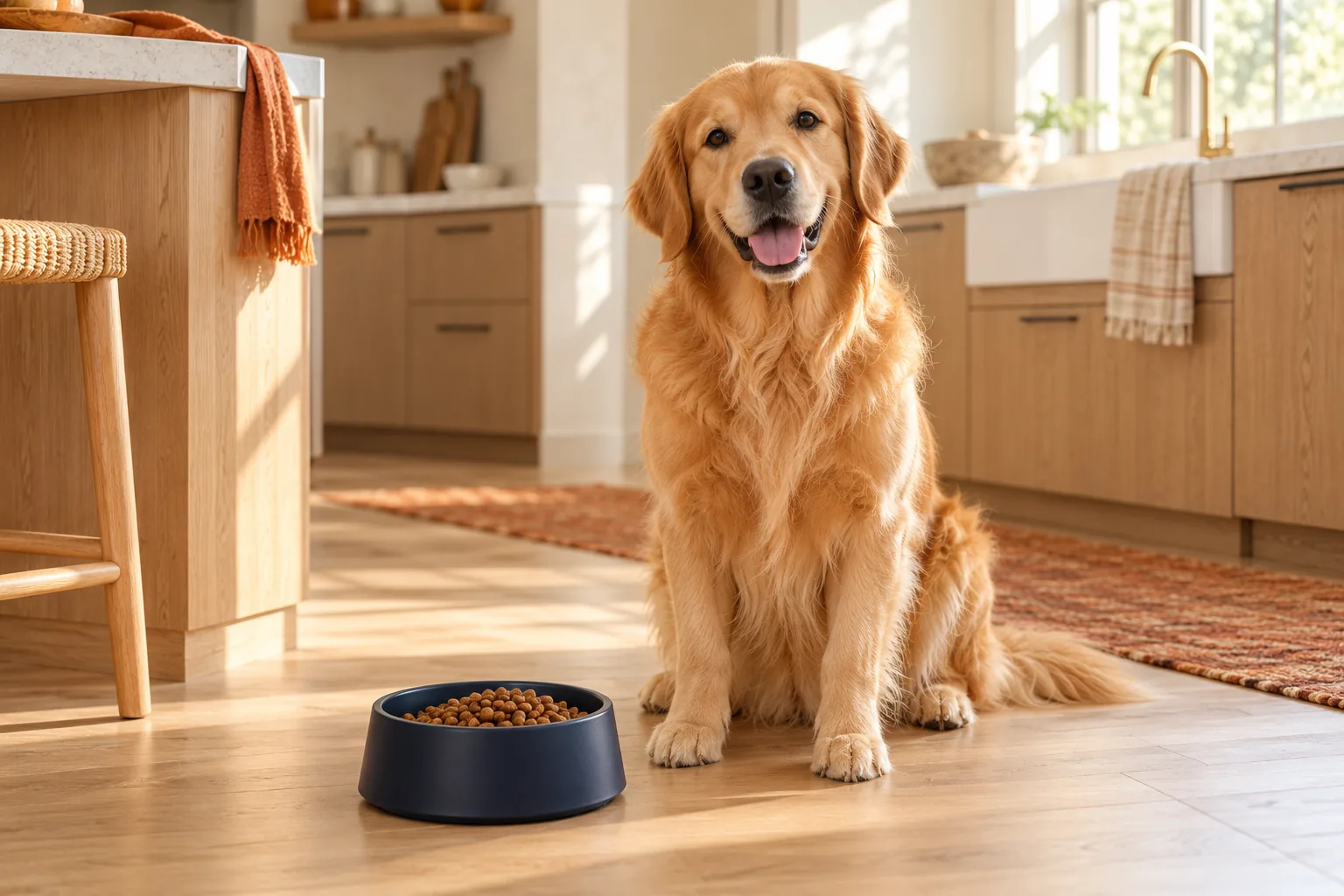
Changing a dog’s food is rarely about a single meal. The days either side of the swap matter more, because a sudden change can bring loose stools, wind or a dog who simply turns their nose up — even when the new recipe would suit them perfectly well once settled. Pacing the change gives the gut time to adjust and gives you a fair chance to judge whether the new food is working.
Read both labels before you begin
Put the old and new packaging side by side. Compare the feeding guidelines, the typical analysis and the first few ingredients, so you know what is actually different. Feeding guidelines on a pack are a starting point rather than a fixed rule, and a richer or more energy-dense food may need a smaller portion. Keep back enough of the old food to last the whole transition, and choose a quiet week without travel, visitors or long car journeys.
A simple mixing plan
Exact timings vary by dog, so treat this as a shape rather than a schedule:
- Early days: mostly the old food, with a small spoonful of the new mixed through.
- Middle days: roughly half and half, stirred together and split evenly across meals.
- Later days: mostly the new food, with a little of the old still in the bowl.
- Finishing: all new food, once stools and appetite have been steady for several days.
Dogs with sensitive digestion may need a longer, slower version of the same pattern. The proportions matter more than the calendar, and it is fine to hold at one ratio for a few extra days.
What to watch
Keep a short note of stools, appetite, energy, wind and any scratching or vomiting. Mild, passing changes are common in the first days. If something persists, step back to the last ratio that worked and stay there before trying again. Do not change treats, toppers or supplements at the same time, or you will not know what caused a problem.
When to pause and ask for advice
Stop the transition and contact your vet if a dog is vomiting, refusing food, passing frequent or watery stools for more than a day or two, or seems flat and withdrawn. This is general guidance only, not veterinary advice, and individual dogs — especially those on prescription diets or with existing conditions — should be switched on a vet’s plan.
Keep the rest steady
Same feeding times, same bowl, fresh water available, and treats counted within the day’s intake. A stable routine makes it much easier to read what the new food is doing.