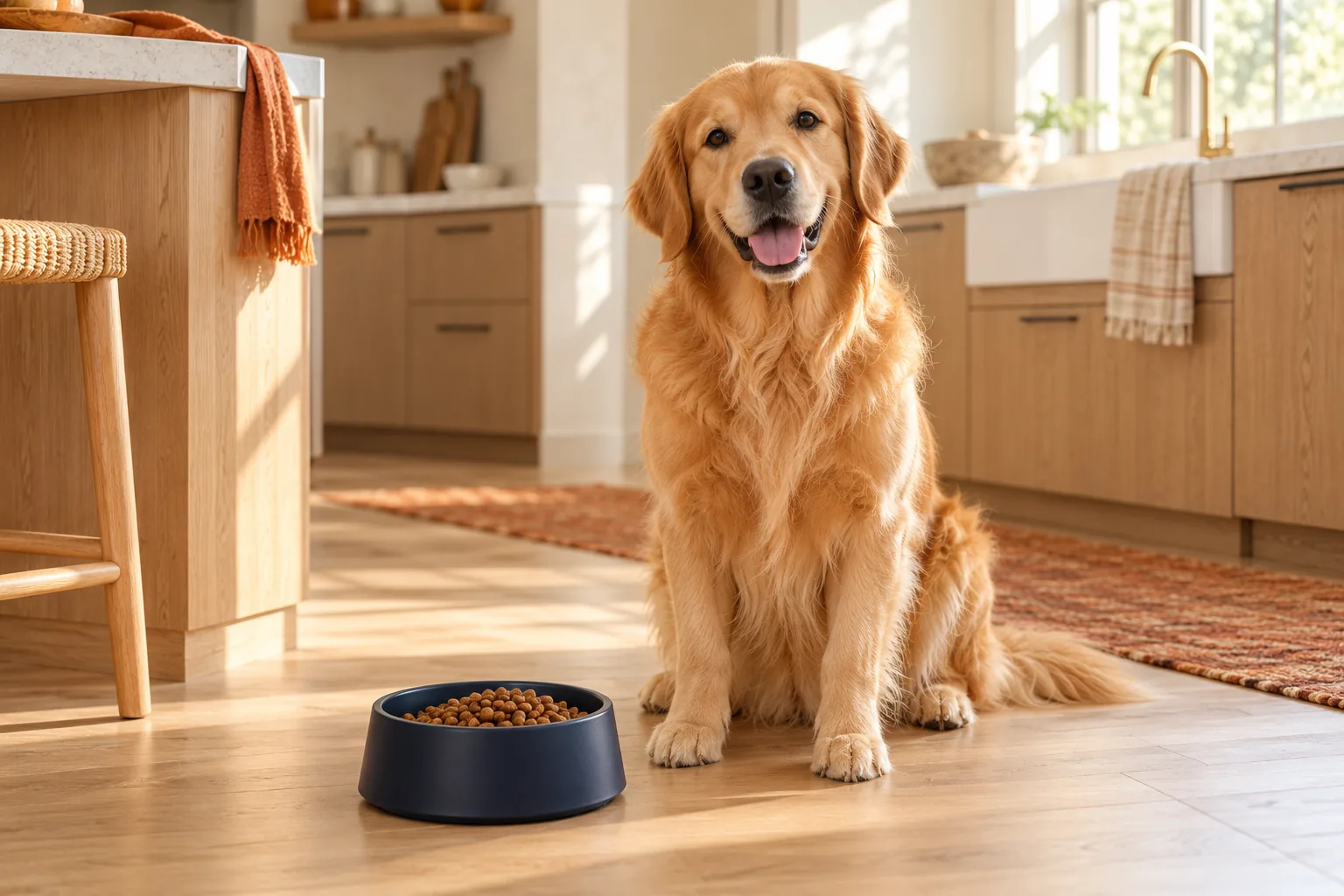
Wet or dry? For most healthy dogs, the honest answer is that either can work, as long as the food is complete and suits your dog’s life stage. The PDSA says that unless your vet has advised otherwise, your dog can have wet food, dry food or a combination of the two (PDSA: your dog’s diet). This guide explains how the formats differ in practice and how to compare them fairly.
The main differences
| Wet food (tins, trays, pouches) | Dry food (kibble) | |
|---|---|---|
| Moisture | High; much of the weight is water | Low |
| Amount per day | A larger weight of food is usually needed per day, because of the water content. Check the feeding guide. | A smaller weight per day. Check the feeding guide. |
| Once opened | Needs refrigerating, covered, or throwing away | Keep in its original bag, sealed, in a cool, dry place |
| Comparing labels | Analytical constituents are given “as fed”, including the water, so wet and dry percentages can’t be compared directly | |
A few points behind that table:
- Moisture is on the label. UK Pet Food says the label must state the moisture percentage when it exceeds 14% (UK Pet Food labelling factsheet), so you’ll see it on wet foods. Because wet food contains much more water, its protein and fat percentages look lower than a dry food’s, even when the two are similar once the water is taken out. Don’t pick between them on percentages alone. Our guide to reading a dog food label explains each line.
- Compare cost per day, not per pack. A tin price or a bag price on its own doesn’t tell you what a day of feeding costs. Work out how much your dog would eat per day from each pack’s feeding guide, then compare on that basis.
- Preference and practicality. The PDSA notes that some dogs prefer to stick to the same food every day, while others enjoy variety, and that the flavour and texture you choose doesn’t matter as long as your dog is happy and the food is complete.
Mixing wet and dry food
Mixed feeding is common, and the PDSA says it’s fine. The key is portion size. If you feed a combination, the PDSA says you need to make sure you’re giving the right total amount by looking at the packets and working out portion sizes. In other words, combining foods doesn’t mean serving a full daily portion of each.
A simple way to do this:
- Decide roughly what share of the day’s food will be wet and what share will be dry.
- Use each pack’s feeding guide for your dog’s weight to work out that share of a full daily amount. For example, half the daily wet amount plus half the daily dry amount.
- Count treats and extras as part of the day’s intake.
- Monitor your dog’s weight and body condition, and adjust if needed. Your vet or vet nurse can help.
Storage and hygiene once opened
The US Food and Drug Administration’s safe-handling advice for pet food applies wherever you live (FDA: tips for safe handling of pet food and treats):
- Promptly refrigerate or throw away unused or leftover tinned and pouched food, and cover refrigerated food tightly.
- Store dry food in a cool, dry place, in its original bag with the top tightly folded down.
- Wash food bowls and scoops with soap and hot water after each use, and don’t use the bowl as a scoop.
- Wash your hands before and after handling pet food and treats.
- Don’t buy packs with visible damage, such as dents, tears or discolouration.
Always follow the storage instructions on the pack, too.
Switching food gradually
Whether you’re moving from dry to wet, wet to dry or to a mix, change gradually. The PDSA advises switching over a couple of weeks and avoiding sudden changes unless your vet advises otherwise, because a sudden change can cause tummy upsets or refusal to eat. Its suggested steps:
- Days 1 to 3: give your dog their regular meal, plus a small teaspoonful of the new food on a separate plate or bowl. Don’t mix the foods together.
- Days 4 to 10: mix a very small amount of the new food into the old one. If that goes well, slowly increase the new food while decreasing the old.
- Days 10 to 14: once your dog is consistently eating the mix for at least a week, start phasing out the old food.
When to talk to your vet
- Your dog has a medical condition, or is on a vet-prescribed diet.
- You notice changes in appetite, drinking, weight or body condition. The RSPCA says that if your dog’s eating or drinking habits change, you should call a vet, as this could be a sign that your dog is ill (RSPCA: a healthy diet for dogs).
- You’re not sure how much to feed, especially for a growing puppy or an older dog.
FAQ
Is wet or dry food better for dogs?
Neither is better for every dog. According to the PDSA, unless your vet has said otherwise, your dog can have wet, dry or a combination. Make sure the food is complete and suits your dog’s life stage.
Can I mix wet and dry dog food?
Yes. Work out portions from both packs’ feeding guides so the total adds up to one day’s food, not a full portion of each.
Why does wet food show lower protein on the label?
Because the percentages include the water in the food. Wet food contains a lot more water than dry, so its percentages look lower, and you can’t compare the two labels directly.
How long can I keep opened wet dog food?
Follow the instructions on the pack. The FDA advises promptly refrigerating, tightly covered, or throwing away leftover tinned and pouched food.
Sources
Checked on 22 October 2026.
- PDSA, Your dog’s diet.
- RSPCA, A healthy diet for dogs.
- UK Pet Food, Understanding pet food labels.
- US Food and Drug Administration, Tips for safe handling of pet food and treats.