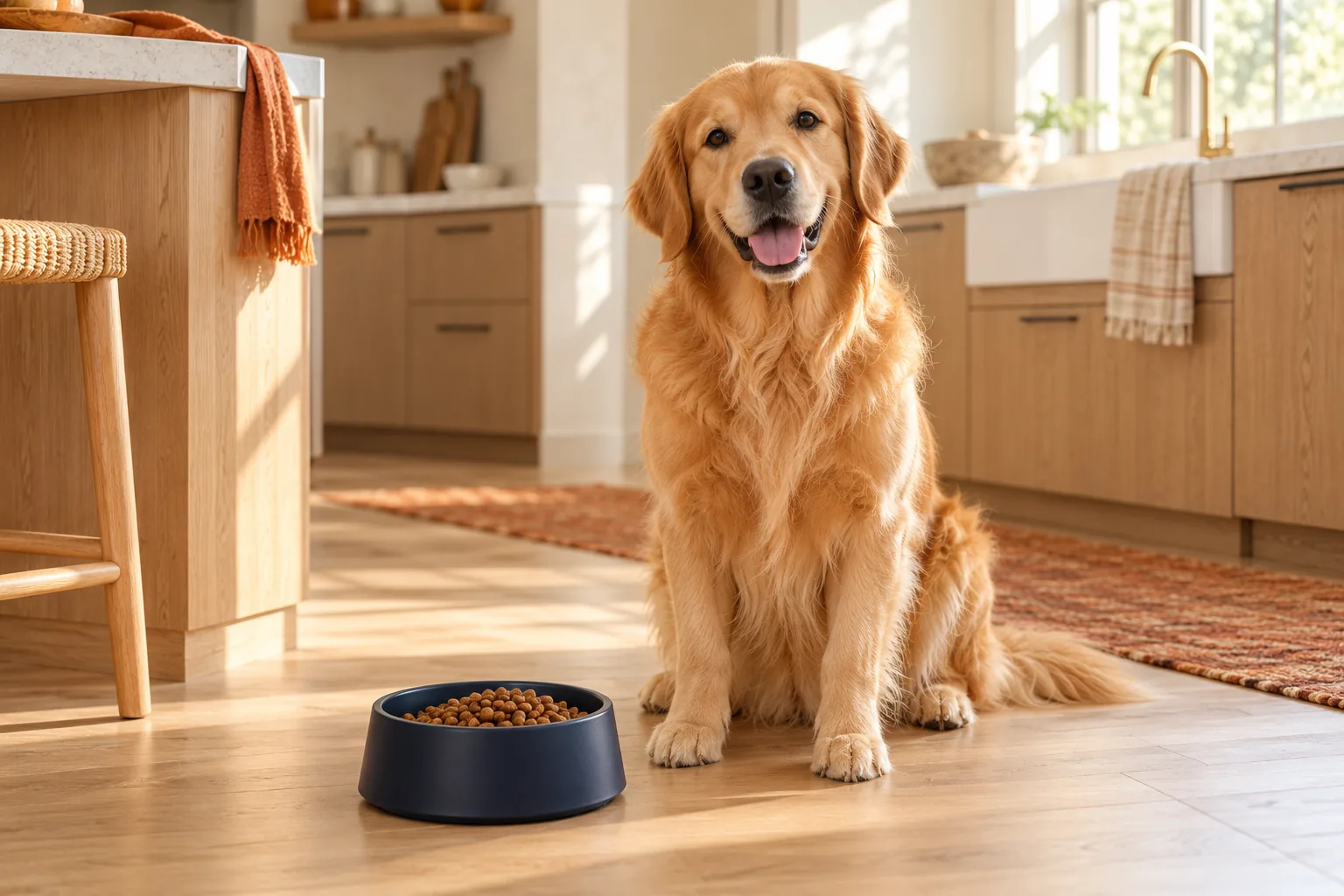
Good storage starts with the instructions on the pack. Those directions are specific to the product, so they should take priority over a generic number of days or a storage tip online. This guide brings together the US Food and Drug Administration’s safe-handling advice for pet food with simple routines for dry kibble, opened wet food and feeding equipment.
Before the food comes home
Check the packaging before buying. The FDA advises against purchasing pet food with visible damage, including dents, tears or discolouration. At home, find the storage instructions and best-before or use-before information before putting the pack away. Keep the batch or lot details available too; our UK dog food label guide explains where these details fit among the other statutory information.
If the label is unclear, contact the manufacturer rather than guessing how long an opened product should remain usable.
How to store dry dog food
The FDA recommends keeping dry pet food in a cool, dry place, in its original bag with the top tightly folded down. That gives a straightforward routine:
- Keep the food in its original packaging so the product and batch information stay with it.
- After measuring a portion, remove as little food as possible and close the bag securely.
- Return it to a cool, dry storage place, away from moisture.
- Use a clean scoop rather than dipping the feeding bowl into the bag.
A large bag can be convenient, but the pack’s own storage and date information still matters. Do not assume that decanting food into another container extends its life. If you use a separate container for convenience, keep the original packaging and its identifying details rather than throwing away the only record of what the food is.
How to store opened wet dog food
Wet food needs different handling once a tin, tray or pouch has been opened. The FDA advises owners to refrigerate or throw away unused or leftover canned and pouched pet food promptly. Refrigerated leftovers should be covered tightly.
Follow the product label for any more specific opened-pack directions. There is no single storage period in this guide because the appropriate instruction can vary by product. If you regularly have leftovers, consider whether the pack size matches the amount you actually serve; our wet vs dry dog food guide also explains why daily portions and pack formats differ.
Keep bowls, scoops and hands clean
Storage is only one part of safe handling. The FDA’s hygiene advice includes:
- Wash food bowls and scoops with soap and hot water after each use.
- Do not use your dog’s bowl as a scoop.
- Wash your hands before and after handling pet food and treats.
A dedicated, washable scoop makes this easier to put into practice. Let clean equipment dry as appropriate before using it again, and keep the feeding routine consistent so washing is not skipped when the pack is nearly empty.
Do not use storage to manage a food change
Keeping a small amount of the previous food can be useful when changing diets, but mixing old and new food as a storage habit is not the same as following a planned transition. If you are changing your dog’s diet, use our guide to switching dog food gradually and keep each product’s packaging and instructions identifiable.
A simple storage checklist
- Pack: no visible dents, tears or discolouration when purchased.
- Dry food: original bag, top tightly folded, cool and dry place.
- Opened wet food: promptly refrigerated and tightly covered, or discarded, following the label.
- Equipment: bowls and scoops washed with soap and hot water after use.
- Hands: washed before and after handling food or treats.
- Dates and directions: read the individual pack rather than relying on a universal shelf-life claim.
FAQ
Should dry dog food stay in its original bag?
Yes. The FDA recommends storing dry food in its original bag with the top tightly folded down, in a cool, dry place. Keeping the bag also preserves the product and batch information.
Can opened wet dog food be left out?
The FDA advises promptly refrigerating or throwing away unused or leftover canned and pouched food. Cover refrigerated food tightly and follow the product’s own instructions.
How long does opened dog food last?
Check the individual pack or ask the manufacturer. This guide does not assign one shelf life to every product. For opened wet food, the FDA’s key handling instruction is to refrigerate leftovers promptly, tightly covered, or throw them away.
Can I scoop kibble with my dog’s bowl?
The FDA advises against this. Use a clean scoop, and wash bowls and scoops with soap and hot water after each use.
Sources and scope
- US Food and Drug Administration: Tips for Safe Handling of Pet Food and Treats
- PDSA: Your dog’s diet, for general feeding guidance and the importance of an appropriate complete diet.
This is general educational information, not veterinary advice. Always follow the individual product label. Speak to your vet about your dog’s dietary needs, particularly if they have a medical condition or eat a prescribed diet.